
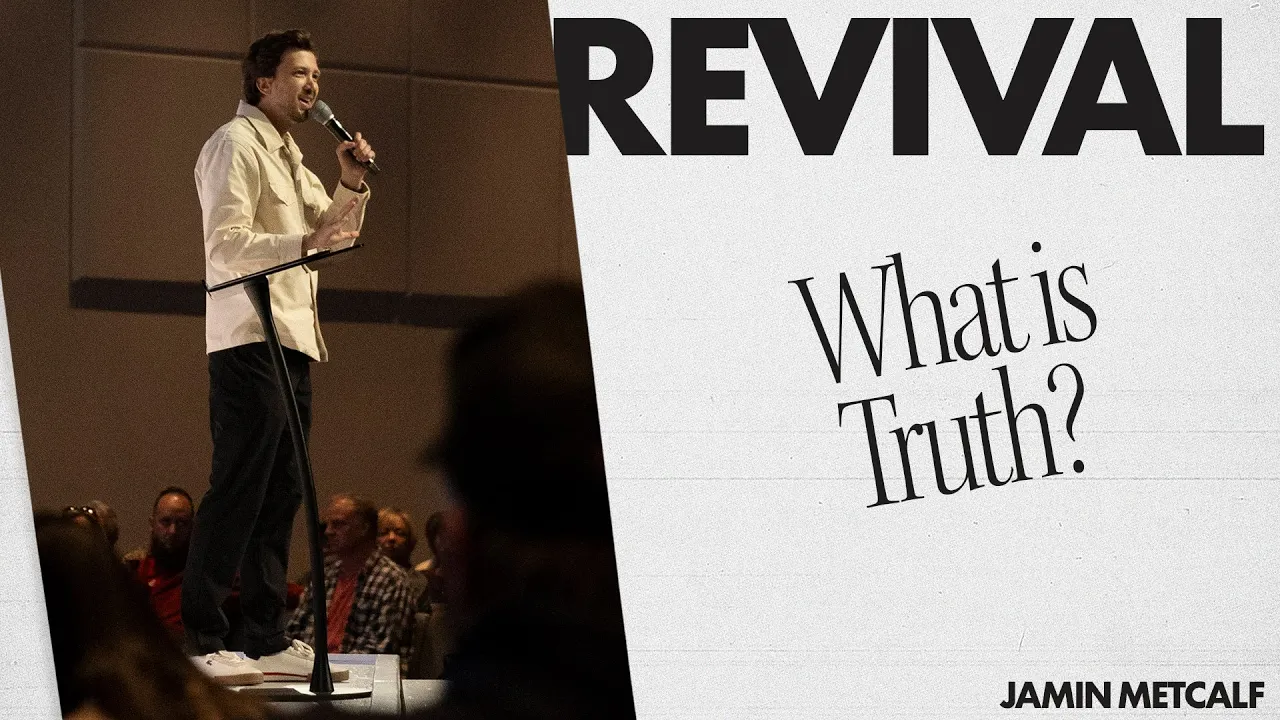
What Is Truth? Why It Matters in a Post-Truth World
By: Pastor Jamin Metcalf
In a cultural moment often described as post-truth, many people are asking a question that feels both ancient and urgent: What is truth, and why does it matter? As skepticism grows and phrases like “my truth” and “your truth” replace the truth, our world is longing for something solid—something real.
Throughout history, revival and renewal have always begun with a rediscovery of truth. Not just abstract truth, but truth that transforms lives. Today, that same hunger exists, especially among younger generations searching for authenticity, meaning, and clarity in an increasingly confusing world.
Revival Begins With an Encounter With Truth
True revival is never manufactured. It begins when people encounter truth in a way that reshapes how they see reality. That encounter leads to transformation, and transformation always results in proclamation.
History gives us powerful examples of this. Under oppressive regimes where Christianity was silenced and Bibles were forbidden, individuals encountered God’s truth through Scripture and Christian writings. That truth sparked faith, sustained courage, and ultimately led to flourishing churches and renewed communities. Revival followed truth.
Our Culture’s Conflicted Relationship With Truth
Today, truth itself is often questioned. In 2016, Oxford Dictionary named “post-truth” as its word of the year, capturing a cultural shift where feelings and personal beliefs outweigh objective reality.
With the rise of social media, constant opinion cycles, and even artificial intelligence, truth feels harder than ever to locate. Yet one thing remains clear: human beings cannot live long without truth. When our thoughts disconnect from reality, confusion and chaos inevitably follow.
What Is Truth, According to the Bible?
In John 18:37–38, Jesus stands before Pontius Pilate and declares, “The reason I was born and came into the world is to testify to the truth.” Pilate famously responds, “What is truth?”—and never waits for the answer.
Scripture gives a bold response to that question:
“I am the way, the truth, and the life.” — John 14:6
Truth is not merely a concept or philosophy. Truth is a person—Jesus Christ. He does not claim to simply know the truth; He claims to be the truth. According to the Gospel of John, all things were created through Him, and reality itself finds its foundation in Him.
This means truth demands more than intellectual agreement. If truth is personal, it calls for relationship, obedience, and surrender.
Why Truth Matters More Than Ever
Truth matters because it leads to freedom and life. Jesus promised that knowing the truth would set us free—not politically or emotionally, but at the deepest level of who we are.
Lies, on the other hand, always lead to destruction. Lies distort reality, and over time, they distort us. When culture believes lies about identity, morality, or purpose, the consequences appear in broken relationships, anxiety, violence, and loss of meaning.
Truth aligns us with reality as God designed it. When we live in truth, our lives—and our communities—begin to heal.
How Did We Lose the Truth?
For most of human history, cultures assumed that truth meant aligning words, thoughts, and actions with reality. Over the last 150 years, Western culture began questioning whether truth even exists.
This shift didn’t start with science itself but with the belief that science could replace God. When God was removed as the foundation of truth, humanity attempted to define reality on its own terms. The result has been widespread confusion about:
- Origin – Where do we come from?
- Meaning – Why are we here?
- Morality – How should we live?
- Destiny – Where are we going?
Without a fixed truth, every answer becomes uncertain—and uncertainty breeds instability.
The Spiritual Root of the Truth Crisis
Scripture teaches that deception has always been the enemy’s primary strategy. From Genesis to the teachings of Jesus, lies are shown to be the gateway to sin, division, and death.
Jesus described the devil as “the father of lies” (John 8:44). The antidote to deception is not louder opinions, but truth grounded in Christ.
There may be many lies, but there is only one truth—and when it is found, lies lose their power.
How to Live in the Truth Today
Knowing truth is not enough. Truth must be lived. Scripture and Christian tradition point to three practical ways to live grounded in truth:
1. Humble Obedience
Truth begins with humility. Growth requires admitting we don’t know everything and being willing to repent when we’re wrong. Repentance realigns our hearts with reality and restores clarity.
2. Deep, Godly Community
Truth is difficult to sustain in isolation. Authentic Christian community challenges assumptions, sharpens wisdom, and keeps belief rooted in love and accountability.
3. Love for the Truth
We seek what we love. When love for truth fades, pursuit stops. But when truth is cherished, it becomes something we actively seek, find, and live out daily.
An Invitation for the Doubter
Christian faith does not fear questions. God invites honest doubt and sincere searching. Many believers encounter truth most powerfully not by avoiding questions, but by pursuing them fully.
As C.S. Lewis once wrote, Christianity is believed not only because it explains reality, but because through it, everything else becomes clearer.
If you’re questioning, searching, or struggling, you are not alone. Truth welcomes investigation. Jesus invites you to taste and see—to bring your doubts, test His claims, and discover what happens when truth becomes personal.
Final Thoughts: Truth That Changes Everything
One word of truth can outweigh the world. And that Word became flesh.
In a world desperate for meaning, clarity, and hope, truth is not lost—it is available. Truth has a name, and His name is Jesus.