
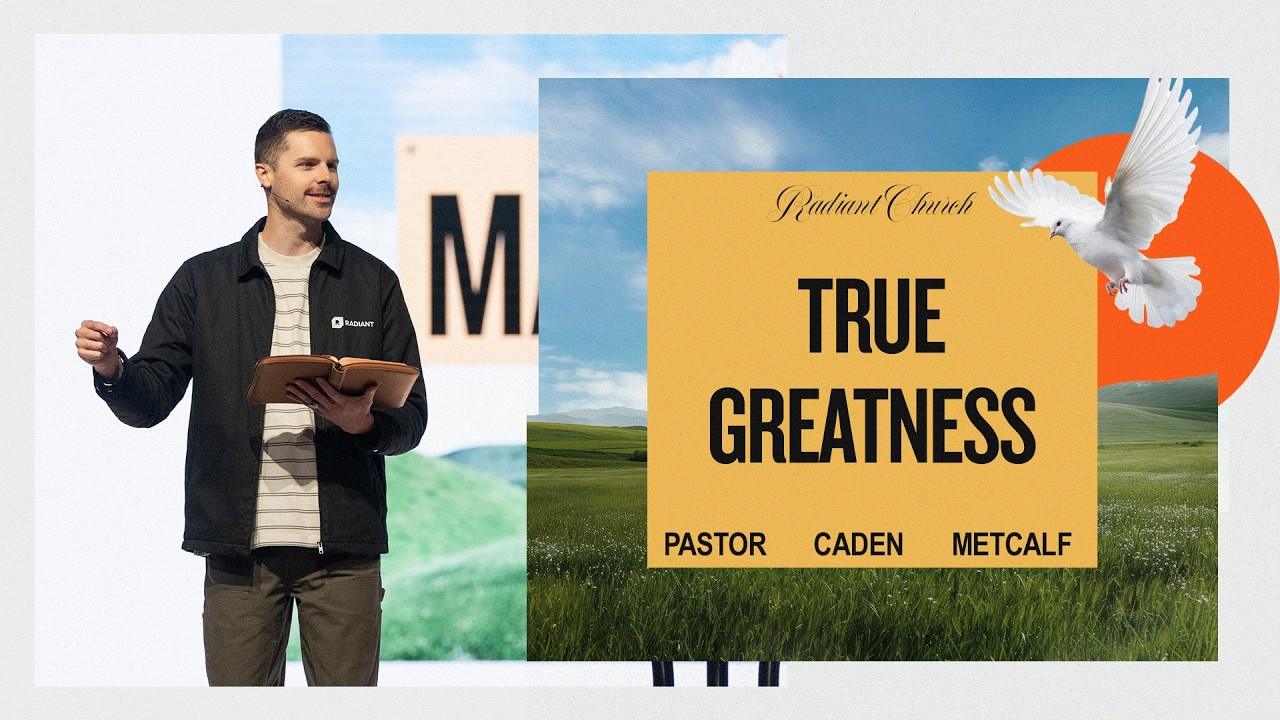
If you’re searching for what true greatness really looks like, Bible offers a surprising answer—one that challenges modern ideas about success, status, and self-worth. In Gospel of Matthew chapters 17–18, Jesus redefines greatness in a way that is both simple and deeply transformative.
This passage isn’t just theology—it’s a practical guide for living with purpose, freedom, and humility in today’s world.
The Context: A Powerful Moment in Matthew 17
In Matthew 17:24–27, Jesus and His disciples arrive in Capernaum. There, a question arises about the temple tax—a required payment used to maintain the place of worship.
Jesus makes a bold statement:
- The “children” (sons of the King) are free
- Yet He chooses to pay the tax anyway
He even performs a miracle—telling Peter to catch a fish that contains a coin to cover the payment.
Key Insight:
Jesus shows both freedom and humility at the same time.
Identity First: You Don’t Earn Your Place With God
One of the most important SEO-friendly truths here is this:
Your identity in Christ is received, not earned.
Jesus makes it clear:
- Sons and daughters of God are already accepted
- They don’t need to prove their worth
Yet many people today still live like:
- “I have to earn God’s love”
- “I need to be better than others”
This mindset leads to:
- Comparison
- Anxiety
- Spiritual burnout
Simple Truth:
Belonging comes before behavior.
The Problem: Comparison and the Need to Be “Great”
Right after Jesus talks about freedom, the disciples ask:
“Who is the greatest in the kingdom of heaven?”
This reveals a common human struggle:
- Turning identity into competition
- Turning faith into a ranking system
Sound familiar?
Even today, people measure themselves by:
- Spiritual performance
- Moral superiority
- Social recognition
SEO Keyword Insight:
Comparison is the enemy of spiritual growth.
Jesus Redefines Greatness (Matthew 18)
Jesus responds in a shocking way—He brings a child into the center of the conversation.
In the first century:
- Children had no status
- No influence
- No power
Yet Jesus says:
“Whoever humbles himself like this child is the greatest.”
What True Greatness Really Means:
- Humility over pride
- Dependence over independence
- Trust over control
Kingdom Freedom: Not About Selfishness
Another powerful takeaway:
Freedom in Christ is not about doing whatever you want.
Jesus had the right not to pay the tax—but He chose humility instead.
Why?
- To avoid unnecessary offense
- To keep the focus on God’s mission
- To serve others, not Himself
Application for Today:
Ask yourself:
- Not just “Can I do this?”
- But “Should I do this?”
A Practical Life Shift: Resume vs. Eulogy
Here’s a powerful way to apply this teaching:
Are you building a resume… or a eulogy?
Resume-focused life:
- Achievement
- Recognition
- Status
Eulogy-focused life:
- Love
- Faithfulness
- Impact on others
True greatness is not about climbing higher—it’s about lowering yourself to lift others up.
Trusting God’s Provision
The coin in the fish isn’t just a miracle—it’s a message:
God provides for those who trust Him.
Just like Jesus provided for Peter:
- God sees your needs
- God knows your situation
- God is able to provide in unexpected ways
Key Takeaways for Everyday Life
1. Your identity is secure
You are already accepted—not because of what you do, but because of what Christ has done.
2. Stop comparing
Comparison steals joy and distorts your purpose.
3. Choose humility daily
True greatness is found in serving, not striving.
4. Use freedom wisely
Not every right needs to be exercised.
5. Trust God fully
He provides, leads, and sustains.
Final Thought: The Upside-Down Kingdom
In God’s kingdom:
- The greatest are the lowest
- The strong are the humble
- The first become last
And that’s what makes it powerful.
If you’re looking for meaning, peace, and purpose, the path isn’t found in proving yourself—it’s found in surrendering, trusting, and becoming like a child.